

Mold Removal Cost in Mount Vernon, WA
Mount Vernon's position in the marine-influenced Skagit Valley creates persistent moisture challenges year-round, with river proximity and coastal fog keeping humidity elevated and ground water trapped beneath many older crawl-space homes—conditions that accelerate mold growth and expand the scope of remediation work. Mold Removal Cost in Mount Vernon, WA depends on how much square footage is affected, which building materials are involved (drywall, carpet, insulation, HVAC components, structural framing), whether containment and air scrubbing equipment is necessary during removal, and if post-remediation clearance testing or structural rebuild is needed after the mold itself is gone. The sooner you have the affected area inspected, the faster remediation can begin, which typically keeps the scope of work—and therefore your cost—from growing.


Understanding Mold Removal Cost in Mount Vernon, WA
Property owners in Mount Vernon face persistent moisture challenges due to the region's marine climate, elevated humidity, and seasonal rainfall patterns that create ideal conditions for indoor mold growth. Older homes built over crawl spaces are particularly vulnerable, as ground moisture can accumulate beneath the structure and migrate indoors over time. Understanding what drives mold removal cost is essential before contacting a remediation provider, since the scope of work—and therefore the final cost—depends entirely on factors discovered only during a professional inspection of your specific property.
Blanton Mold Remediation connects Mount Vernon property owners with independent local mold inspection and remediation providers who visit your home, assess the affected areas, identify the materials involved, and explain the full scope of work before any cost is discussed. The sooner you address mold growth, the more limited the affected area is likely to be, which helps keep the remediation scope—and associated cost—as contained as possible. This approach ensures you understand exactly what needs to be done and why before moving forward.
Understanding Mold Removal Cost in Mount Vernon
How Affected Area Size Drives Cost
Mold removal cost depends directly on square footage affected. A small patch on one wall requires less labor, equipment, and materials than mold spanning multiple rooms or structural cavities. Larger affected areas mean more containment setup, more removal work, and longer remediation time.
Materials Involved Shape the Scope
What materials harbor mold determines removal complexity and cost. Surface mold on drywall may require section removal and replacement. Carpet, insulation, and HVAC components often need extraction or disposal. Structural wood damage requires assessment for safe removal and rebuild options after mold treatment.
Containment and Air Quality Equipment
Controlling mold spores during removal requires containment barriers and air scrubbing equipment. These tools prevent spore spread to unaffected areas. Post-remediation clearance testing confirms safe indoor air quality. Equipment rental and testing add to overall removal cost based on contamination severity.
Mount Vernon's Persistent Ground Moisture
The Skagit Valley's marine climate and flat terrain create year-round elevated humidity and trapped ground moisture, especially in crawl spaces common to older Mount Vernon homes. Chronic moisture exposure often means larger mold colonies and structural involvement, expanding the remediation scope and cost compared to isolated moisture events.
How Your Mold Removal Cost Is Estimated in Mount Vernon, WA
Request an On-Site Estimate
Call Blanton Mold Remediation to describe where you've noticed mold or water damage in your Mount Vernon home. A local independent provider will schedule a time to visit your property and inspect the affected areas to determine what mold removal will involve.
Assess Scope and Cost Drivers
The provider inspects how much square footage is affected, which materials contain mold (drywall, carpet, insulation, HVAC components), and whether containment equipment, air scrubbing, structural rebuild, or post-remediation clearance testing will be necessary. The extent of these factors directly shapes the mold removal cost.
Review the Estimate Before Work Begins
The provider delivers a detailed estimate breaking down the mold removal scope, labor, materials, and equipment required for your specific situation. You review the estimate with no obligation; work only begins once you approve it and understand what drives the cost of your remediation.
Wondering about Mold Removal Cost in Mount Vernon? Get an on-site estimate from a local provider.
Call Now — (360) 226-7710What Drives Mold Removal Cost in Mount Vernon
Mold removal cost in Mount Vernon depends entirely on what the independent local provider finds during inspection—how much area is affected, which materials contain mold, and what work is needed to remove it safely. A small patch of surface mold on drywall requires far less work than mold that has spread through insulation, carpet, or structural framing. The Skagit Valley's persistent moisture from river proximity and coastal fog means many properties here deal with elevated indoor humidity year-round, not just during wet seasons. Older homes built over crawl spaces—common throughout the area—often face trapped ground moisture that feeds mold growth, potentially requiring containment setup, air scrubbing equipment, and removal of affected materials across a larger footprint. Newer construction may have fewer hidden cavities, but any home can develop mold if moisture enters through leaks or poor drainage.
Beyond removal itself, the scope—and therefore the cost—grows when post-remediation clearance testing is recommended to confirm the work is complete, or when structural elements like joists or subflooring need replacement after mold extraction. Acting quickly when you first notice mold usually keeps the affected area smaller and the work more contained, which directly reduces what an independent provider needs to do. Only an on-site inspection reveals the true scope, materials involved, and equipment needed, so the provider can give you an accurate picture of what removal will cost for your specific situation.
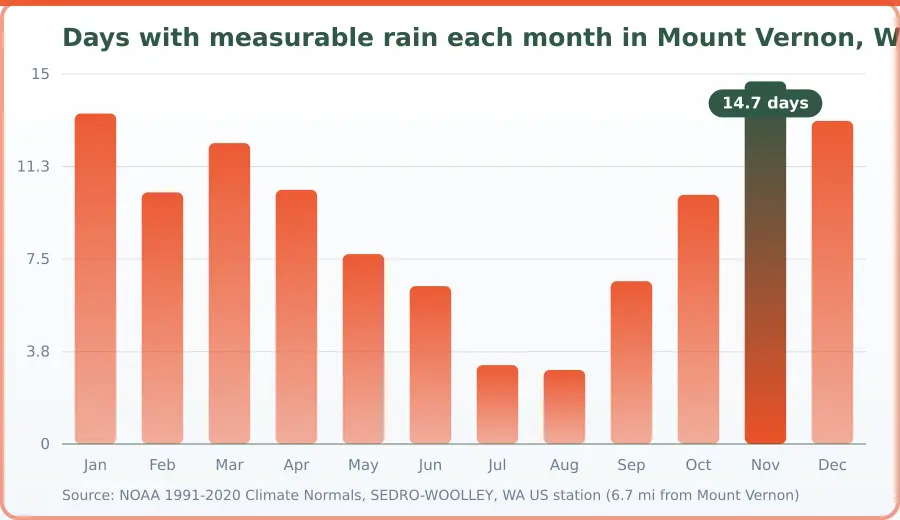
| Period | Days with measurable rain by month (days) |
|---|---|
| Jan | 13.4 |
| Feb | 10.2 |
| Mar | 12.2 |
| Apr | 10.3 |
| May | 7.7 |
| Jun | 6.4 |
| Jul | 3.2 |
| Aug | 3 |
| Sep | 6.6 |
| Oct | 10.1 |
| Nov | 14.7 |
| Dec | 13.1 |
Source: NOAA 1991-2020 Climate Normals, SEDRO-WOOLLEY, WA US station (6.7 mi from Mount Vernon). Retrieved October 5, 2026.
Seasonal Factors That Shape Mold Removal Cost
Spring: Snowmelt and Saturation
Spring thaw and heavy rainfall increase groundwater pressure against foundations and crawl spaces throughout the region. Properties experiencing water intrusion or rising moisture levels may require larger containment areas and extended drying efforts, which increases the scope and cost of removal work.
Summer: Warm Humidity and Growth
Elevated humidity persists year-round in Mount Vernon's marine-influenced Skagit Valley, but summer warmth accelerates mold colonization in damp crawl spaces and poorly ventilated areas common in older homes. Fast-growing infestations may affect more materials—insulation, framing, and subflooring—requiring more extensive remediation and post-removal reconstruction.
Fall: Preparation and Prevention Delays
Autumn rains arrive as heating systems restart, and property owners often delay addressing moisture problems discovered earlier. Waiting extends mold spread into HVAC components, ductwork, and structural cavities, expanding the area requiring professional removal and potentially increasing equipment and testing costs.
Winter: Condensation and Compound Damage
Cold outdoor temperatures meet heated indoor air, creating condensation on windows, pipes, and uninsulated surfaces. Combined with reduced ventilation during heating season, this moisture can fuel mold growth in walls and attics, making removal more complex and widening the materials requiring treatment and clearance testing.
Related Services
Mold Removal Cost FAQs — Mount Vernon, WA
The size of the affected area is usually the largest driver of cost. Mold removal also depends on what materials are involved—drywall, insulation, and framing require different approaches than hard surfaces. Containment measures, whether materials can be salvaged or must be replaced, and the complexity of access all influence the final cost. A local provider's on-site inspection determines the scope and pricing.
Early intervention limits how far mold spreads into walls, insulation, and structural materials. The longer mold goes unaddressed, the more material may need removal and replacement, raising labor and disposal costs significantly. Catching growth in its early stages typically means a smaller affected area and less invasive remediation work.
A local mold removal provider conducts an on-site inspection to assess the extent of growth, affected materials, and containment requirements. Based on what they find, they develop an estimate specific to your property. This inspection-first approach ensures pricing reflects the actual scope of work needed, not guesswork.
Insurance coverage for mold removal varies widely by policy and cause. Some policies may cover mold related to a covered peril like water damage from storms; others exclude mold entirely. Review your policy details and contact your insurer directly. A local provider can document the work for your claim, but they cannot guarantee coverage approval.
Blanton Mold Remediation works to connect Mount Vernon property owners with local independent providers as quickly as possible. Once matched, a provider can typically schedule an on-site inspection and provide a cost estimate in a timeframe that suits your situation. Speed matters when mold is present, so contact us to get the process started.
The Skagit Valley's persistent moisture and elevated humidity year-round can create conditions where mold grows deeper into building materials and is more likely to return without thorough drying and removal. Older homes with crawl spaces are particularly susceptible to ground moisture intrusion. These regional moisture challenges may increase the scope and cost of remediation compared to drier climates.
Homeowner Safety Toolkit
Verify Your Mount Vernon, WA Mold Remediation Company
Before you hire anyone, use these independent national resources to confirm credentials, standards, and track record.
BBB
Look up any mold remediation company's complaint history, customer reviews, and accreditation status — a free, independent check before you hire.
Check StandingCDC
Covers the health effects of mold exposure and safe cleanup practices, separate from the remediation work itself — useful if anyone in the home has respiratory symptoms.
Mold Health GuideACAC
An independently accredited certifying body for mold inspectors and consultants — one of the few in this field whose standards are verified by an outside accreditation board, not just self-declared.
Find a Certified InspectorQuestions about Mold Removal Cost in Mount Vernon, WA? Call (360) 226-7710 to arrange a local on-site estimate.
Call Now — (360) 226-7710Areas We Serve in Mount Vernon, Washington
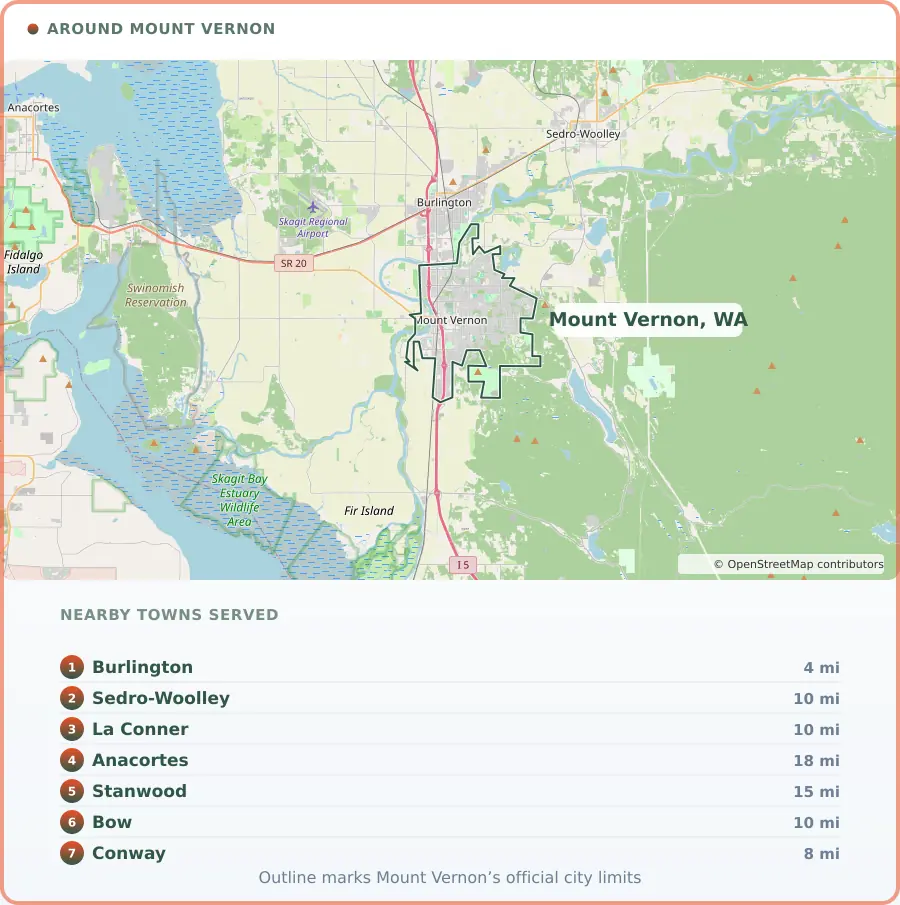
Serving Mount Vernon, WA and 7 communities around it. Local knowledge of how each area is built shapes how the work is handled there.
Mount Vernon, WA Information
Mount Vernon sits where the Skagit River meets Interstate 5, serving as the county seat of Skagit County and the commercial heartbeat for the farming communities that ring it. The fertile valley around the city has long supported bulbs, berries, and dairy, and that agricultural legacy still shapes local life—most visibly each spring when the Skagit Valley Tulip Festival draws visitors from across the region. Government offices, Skagit Valley Hospital, and Skagit Valley College add steady institutional weight alongside the fields.
With close to 36,000 residents, Mount Vernon feels like a real working town rather than a bedroom suburb—neighborhoods like Eaglemont and downtown each carry their own character, while retail, food processing, and public services keep the economy diverse. It's a place built on riverbanks and farmland, grounded and unpretentious.
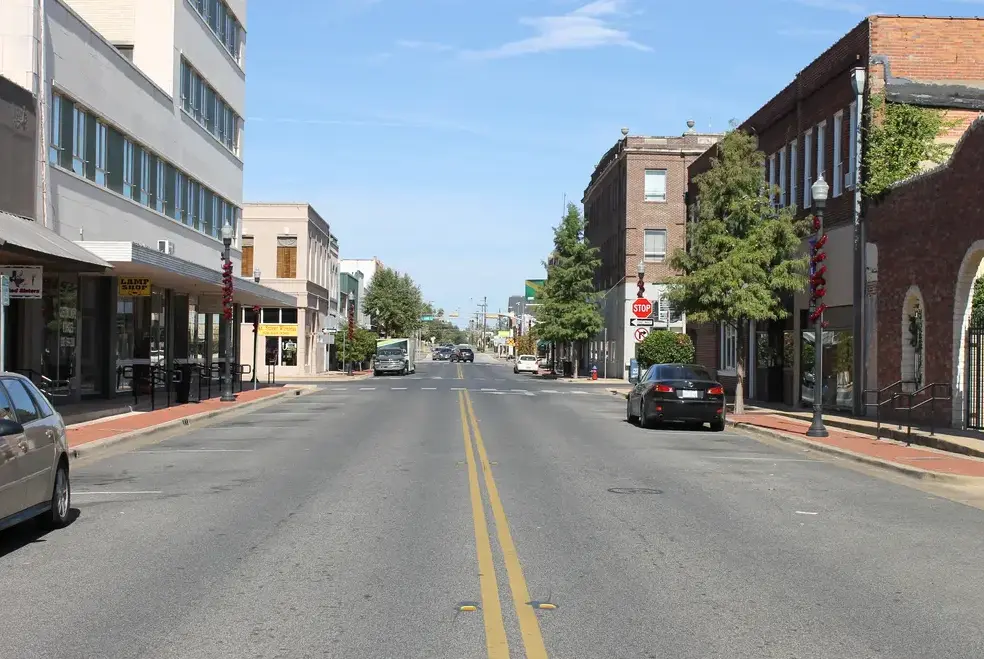
Photo: Billy Hathorn, CC BY-SA 3.0