

Ceiling Mold Removal in Mount Vernon, WA
Mount Vernon's position in the Skagit Valley means persistent moisture from river air and fog keeps humidity elevated throughout the year, creating conditions where ceiling mold can develop and spread without seasonal letup. Older homes in areas like Eaglemont and Riverside, often built with crawl spaces where ground moisture accumulates, face particular risk of mold reaching upper levels through wall cavities and framing. Blanton Mold Remediation connects you with local providers who can inspect, contain, and remove ceiling mold safely, helping protect your indoor air quality and your home's structural integrity.
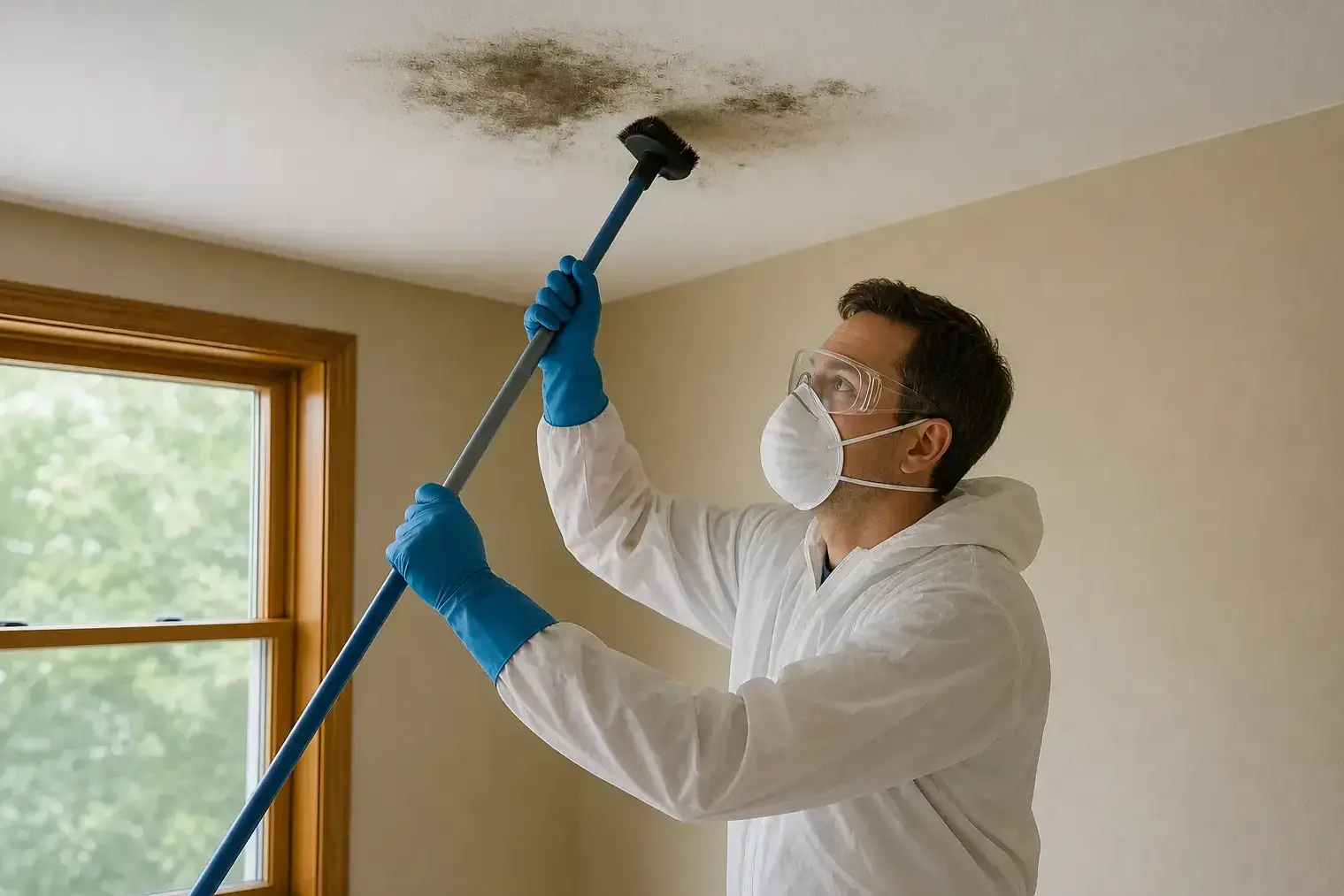
What gets cleaned on a ceiling, and what comes out
The honest answer to “does this come out, or can it be cleaned?” turns on two things — what the material is, and how many square feet are affected. Those are the two axes of the EPA’s own remediation table, reproduced below for the materials usually found on a ceiling.
| Material | Under 10 sq ftabout a cabinet door, or one ceiling tile | 10 to 100 sq ftroughly one wall, or a small bathroom | Over 100 sq ftmore than one room's worth of surface |
|---|---|---|---|
| Wallboardthe ceiling drywall itselfEPA, Table 2 | HEPA vacuum | HEPA vacuumRemove and discard | HEPA vacuumRemove and discard |
| Wood surfacesjoists and framing in the cavity aboveEPA, Table 2 | Wet vacuumDamp wipeHEPA vacuum | Wet vacuumDamp wipeHEPA vacuum | Wet vacuumDamp wipeHEPA vacuumRemove and discard |
What those methods mean, in EPA's words
- Wet vacuum
Wet vacuums are vacuum cleaners designed to collect water. They can be used to remove water from floors, carpets and hard surfaces where water has accumulated.
EPA, cleanup methods- Damp wipe
Mold can generally be removed from nonporous (hard) surfaces by wiping or scrubbing with water, or water and detergent.
EPA, cleanup methods- HEPA vacuum
HEPA (High-Efficiency Particulate Air) vacuums are recommended for final cleanup of remediation areas after materials have been thoroughly dried and contaminated materials removed.
EPA, cleanup methods- Remove and discard
Building materials and furnishings that are contaminated with mold growth and are not salvageable should be double-bagged using 6-mil polyethylene sheeting.
EPA, cleanup methods
Removed and replaced, whatever the area
- Ceiling tiles — drop-ceiling or acoustic tiles.
Discard and replace.
EPA, Table 1This is the action EPA's water-damage table gives for ceiling tiles. It is the one material here with no size threshold to weigh. - Fiberglass or other insulation — any insulation sitting on top of the ceiling.
Fiber glass, or any other insulation material that is wet or visibly moldy (or if an unacceptable odor is present) should be removed and replaced by a qualified heating and cooling system contractor.
EPA, air duct cleaningEPA states this in its heating-and-cooling guidance and it is quoted here as written. Its water-damage table reaches the same conclusion for both fiberglass and cellulose insulation.
These guidelines are for damage caused by clean water. If you know or suspect that the water source is contaminated with sewage, or chemical or biological pollutants, then Personal Protective Equipment and containment are required by OSHA.
EPA, Table 1Porous materials that are wet and have mold growing on them may have to be discarded.
EPA, cleanup methodsMold can grow on wood, drywall, carpet and furniture if they remain wet for more than 24 hours.
EPA, flood cleanup
Ceiling mold nearly always means water arriving from above — a roof, a supply or waste line, or a bathroom on the floor above. The ceiling is the symptom, so cleaning it without finding the source buys a few months at most. Drop-ceiling tile is the one material here with no decision to make: EPA's water-damage table lists it as discard and replace.
Heavy rain — an inch or more in a day — arrives in Mount Vernon on about 7.3 days a year.Source: NOAA 1991-2020 Climate Normals, SEDRO-WOOLLEY, WA US station (6.7 mi from Mount Vernon)
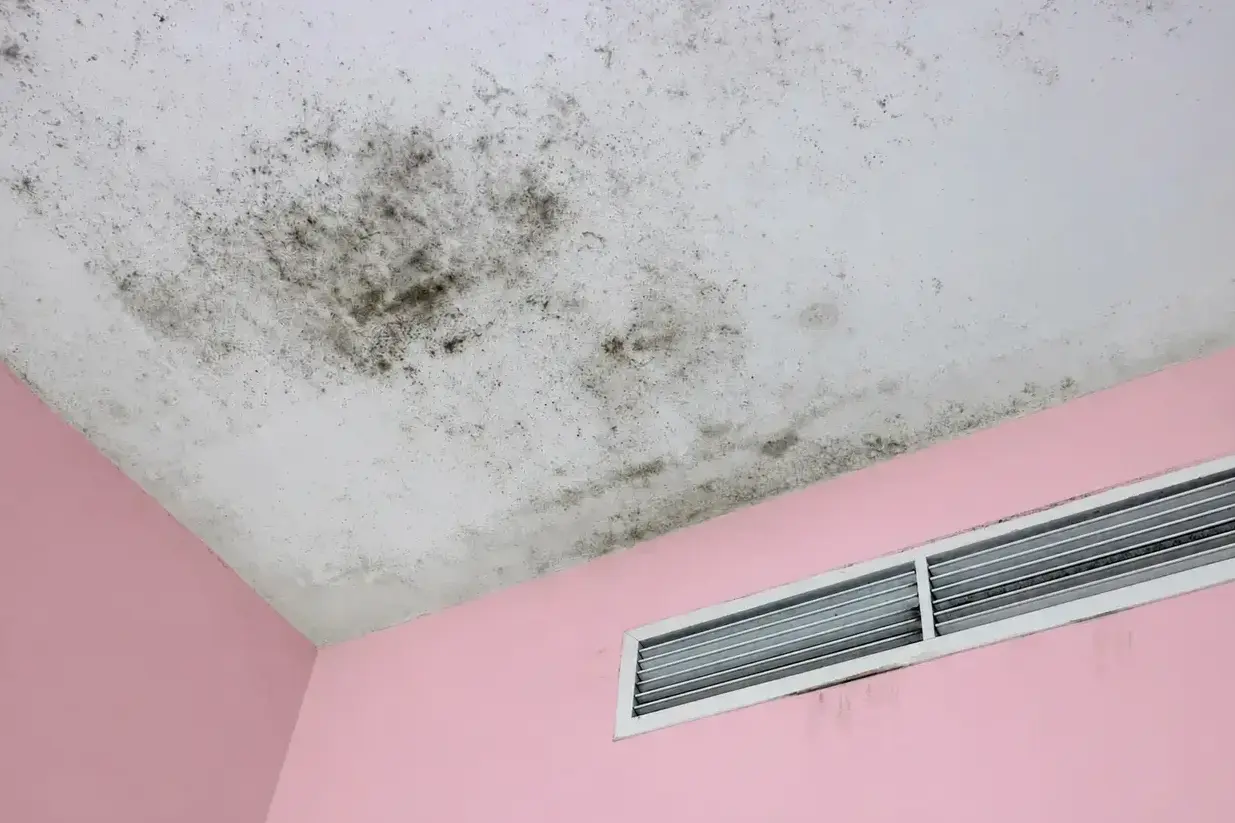
Ceiling Mold Removal for Mount Vernon Homeowners
Mount Vernon's position in the Skagit Valley creates conditions where elevated moisture persists throughout the year, driven by proximity to the river and regular coastal fog. This sustained dampness, combined with the valley's flat terrain where ground moisture collects easily, creates an ideal environment for mold to develop indoors—particularly on ceilings, where condensation and water intrusion from above often go unnoticed until growth becomes visible. Many older homes in the area are built over crawl spaces, where moisture can migrate upward into living spaces and settle on upper surfaces, making ceiling mold removal a common necessity for property owners seeking to protect both their homes and indoor air quality.
Blanton Mold Remediation connects Mount Vernon property owners with independent local providers who specialize in ceiling mold removal, taking a thorough approach that begins with careful inspection to identify the full extent of growth and any underlying moisture sources. Removal is performed with proper containment to prevent spore spread, followed by cleaning and treatment of affected areas. Because moisture is often the root cause, the process includes attention to ventilation and moisture control, helping reduce the likelihood of recurring issues. Whether mold appears in a single corner or across a larger ceiling surface, the providers in our network work to restore your indoor environment and give you confidence in the results.
Why Mount Vernon Property Owners Choose Blanton Mold Remediation
Fast Ceiling Mold Removal Access
Blanton connects you quickly with local providers ready to assess and remove ceiling mold. Responsive service means less time waiting and faster action to protect your indoor air quality.
Ceiling Mold Removal Done Thoroughly
Independent local providers handle complete ceiling mold removal with proper containment and remediation. Clear communication throughout the process keeps you informed every step of the way.
Local Ceiling Mold Removal Expertise
Mount Vernon providers connected through Blanton understand how persistent indoor moisture drives mold growth in homes here. Their experience with regional conditions ensures ceiling mold removal tailored to your property's needs.
Mold Removal for Year-Round Moisture
The Skagit Valley's elevated humidity persists throughout the year, creating ongoing conditions where ceiling mold can develop. Blanton connects you with local providers who understand and address this constant moisture challenge with targeted ceiling mold removal.
How The Ceiling Mold Removal Process Works
Schedule Your Ceiling Mold Removal Assessment
Contact Blanton Mold Remediation to book a ceiling mold inspection with a local Mount Vernon provider. The inspector will examine affected ceiling areas, identify moisture sources, and assess the scope of removal needed.
Diagnose Moisture and Plan Ceiling Mold Removal
The provider traces the root cause of your ceiling mold—often trapped ground moisture common in the Skagit Valley's elevated humidity environment. A detailed removal plan is developed to safely contain and eliminate the mold while addressing the moisture source.
Complete Ceiling Mold Removal and Verify Results
The independent provider performs ceiling mold removal using containment and remediation techniques, then verifies the affected area is clean and dry. Follow-up guidance on moisture control helps reduce the likelihood of mold returning to your ceilings.
Dealing with Ceiling Mold Removal in Mount Vernon? Get fast, professional help.
Call Now — (360) 226-7710Ceiling Mold Removal Across Mount Vernon
Mount Vernon's position in the Skagit Valley creates persistent moisture conditions that make ceiling mold removal a recurring need for many property owners. Year-round humidity from river proximity and coastal fog means indoor air stays damp far longer than in drier climates, and this moisture naturally rises and collects in attics, around roof penetrations, and within ceiling cavities. Older homes throughout neighborhoods like Eaglemont and Riverside are particularly vulnerable, since aging roofs and walls allow water infiltration that feeds mold growth in spaces homeowners rarely see until the problem becomes visible.
Ceiling mold removal in Mount Vernon requires attention to both the visible colony and the underlying moisture source—often trapped ground vapor moving upward through older construction. A local provider can assess whether poor attic ventilation, roof leaks, plumbing sweats, or persistent humidity is driving the problem, then recommend removal and moisture control steps tailored to your home's age and layout. Because Mount Vernon's damp climate means mold can return if humidity remains high, removal alone is incomplete; a thorough approach addresses the moisture environment itself to help prevent recurrence.
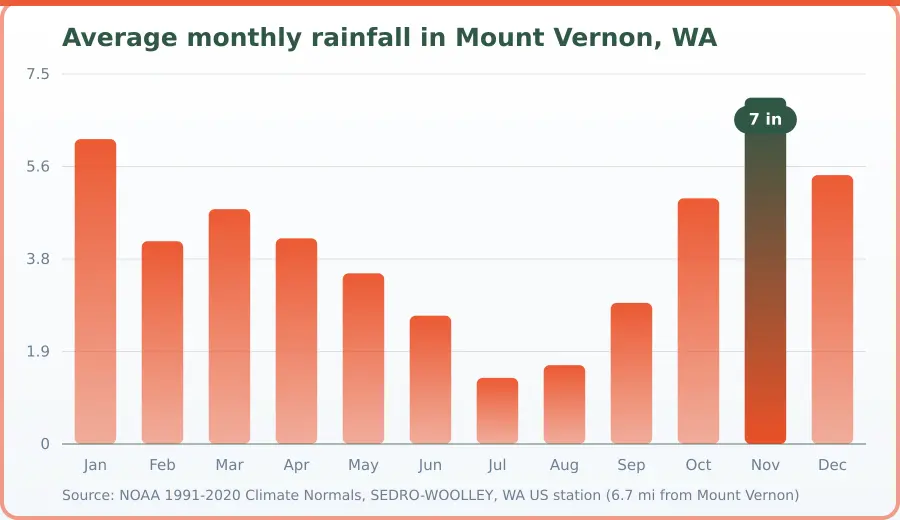
| Period | Monthly rainfall (in) |
|---|---|
| Jan | 6.2 |
| Feb | 4.1 |
| Mar | 4.8 |
| Apr | 4.2 |
| May | 3.5 |
| Jun | 2.6 |
| Jul | 1.3 |
| Aug | 1.6 |
| Sep | 2.9 |
| Oct | 5 |
| Nov | 7 |
| Dec | 5.5 |
Source: NOAA 1991-2020 Climate Normals, SEDRO-WOOLLEY, WA US station (6.7 mi from Mount Vernon). Retrieved October 5, 2026.
Seasonal Ceiling Mold Removal Needs in Mount Vernon
Spring: Rising Moisture
Snowmelt and spring rains saturate the ground, pushing moisture upward into homes and raising indoor humidity levels. Ceiling mold becomes more visible as condensation collects above and mold colonies spread across drywall and insulation. Blanton connects property owners to local providers who assess moisture sources and remove active mold before it spreads deeper into framing.
Summer: Heat and Hidden Growth
Warm temperatures accelerate mold metabolism and reproduction on ceiling surfaces, especially in poorly ventilated attics and upper rooms. Mold that began in spring now spreads faster and deeper into structural materials. Local providers accessible through Blanton use targeted removal and ventilation improvements to halt summer ceiling mold progression before fall moisture returns.
Fall: Pre-Winter Preparation
Cooling temperatures and increased rainfall create ideal conditions for ceiling mold to establish new colonies before heating season traps indoor humidity. Attics and upper-floor ceilings show fresh growth as homes transition from summer air conditioning to closed-window living. Blanton helps property owners find providers who remove fall mold infestations and improve airflow to prevent winter buildup.
Winter: Year-Round Challenge
The Skagit Valley's persistent river moisture and coastal fog keep humidity elevated all year, and winter heating indoors creates condensation on cold ceiling surfaces—a perfect breeding ground for mold. Older homes built over crawl spaces experience compounded moisture rise, especially where ground water accumulates below. Blanton connects owners to local providers who manage both ceiling mold removal and underlying moisture control to break the winter cycle.
Related Services
Ceiling Mold Removal FAQs — Mount Vernon, WA
Ceiling mold removal starts with inspection to identify the extent of growth and moisture source. The independent provider will contain the affected area, remove contaminated materials (drywall, insulation, or tile), treat the underlying surface, and address moisture or ventilation issues driving the problem. Once dry and treated, new materials are installed and finished to restore your ceiling.
Blanton Mold Remediation connects Mount Vernon property owners with local independent providers who can typically schedule inspections and removal work promptly. Contact us with details about your ceiling mold concern, and we'll link you with a nearby provider ready to assess and begin remediation on your timeline.
Pricing depends on the affected ceiling area, mold extent, accessibility, and whether the moisture source (roof leak, bathroom ventilation, or condensation) requires repair. Material replacement, containment setup, and labor complexity also influence cost. The independent provider will assess your specific situation and discuss pricing options during the inspection.
Clear the room and seal off the area to contain dust and spores. Close doors, windows, and air vents in the affected space. Move furniture, decorations, and personal items away from the work zone. The provider will set up plastic sheeting and negative air pressure as part of their containment process during removal.
Control indoor humidity through proper ventilation, especially in bathrooms and kitchens—use exhaust fans during and after showers or cooking. Fix roof leaks and check gutters regularly. Ensure attic ventilation is clear and unobstructed. Monitor ceiling areas periodically for early signs of water damage or discoloration.
The Skagit Valley's marine-influenced climate maintains high humidity year-round due to river moisture and persistent fog. This elevated moisture environment creates ideal conditions for mold growth on ceilings, especially when ventilation is inadequate or roof and plumbing leaks go unaddressed. Regular inspection and moisture control are key to prevention.
Homeowner Safety Toolkit
Verify Your Mount Vernon, WA Mold Remediation Company
Before you hire anyone, use these independent national resources to confirm credentials, standards, and track record.
BBB
Look up any mold remediation company's complaint history, customer reviews, and accreditation status — a free, independent check before you hire.
Check StandingCDC
Covers the health effects of mold exposure and safe cleanup practices, separate from the remediation work itself — useful if anyone in the home has respiratory symptoms.
Mold Health GuideACAC
An independently accredited certifying body for mold inspectors and consultants — one of the few in this field whose standards are verified by an outside accreditation board, not just self-declared.
Find a Certified InspectorDealing with Ceiling Mold Removal in Mount Vernon, WA? Call (360) 226-7710 for 24/7 help.
Call Now — (360) 226-7710Areas We Serve in Mount Vernon, Washington
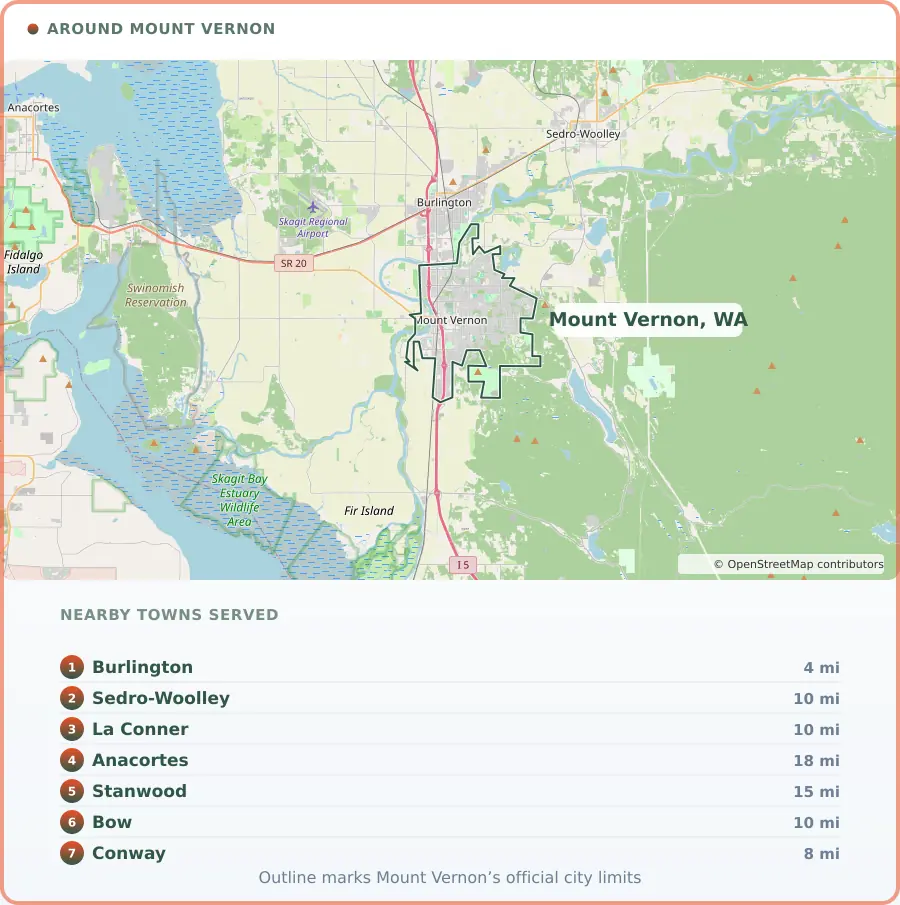
Serving Mount Vernon, WA and 7 communities around it. Local knowledge of how each area is built shapes how the work is handled there.
Mount Vernon, WA Information
Mount Vernon sits where the Skagit River meets Interstate 5, serving as the county seat of Skagit County and the commercial heartbeat for the farming communities that ring it. The fertile valley around the city has long supported bulbs, berries, and dairy, and that agricultural legacy still shapes local life—most visibly each spring when the Skagit Valley Tulip Festival draws visitors from across the region. Government offices, Skagit Valley Hospital, and Skagit Valley College add steady institutional weight alongside the fields.
With close to 36,000 residents, Mount Vernon feels like a real working town rather than a bedroom suburb—neighborhoods like Eaglemont and downtown each carry their own character, while retail, food processing, and public services keep the economy diverse. It's a place built on riverbanks and farmland, grounded and unpretentious.

Photo: Billy Hathorn, CC BY-SA 3.0