

Commercial Mold Remediation in Mount Vernon, WA
Mount Vernon's position in the Skagit Valley creates conditions where ground moisture persists throughout the year, driven by river proximity and coastal fog rather than seasonal storms alone. For commercial properties—especially older buildings with crawl spaces—this sustained dampness creates an environment where mold growth becomes a recurring concern rather than an occasional problem. Blanton Mold Remediation connects Mount Vernon business owners with local providers who understand these moisture dynamics and can design remediation plans that address the root cause, protecting indoor air quality and building integrity over time.
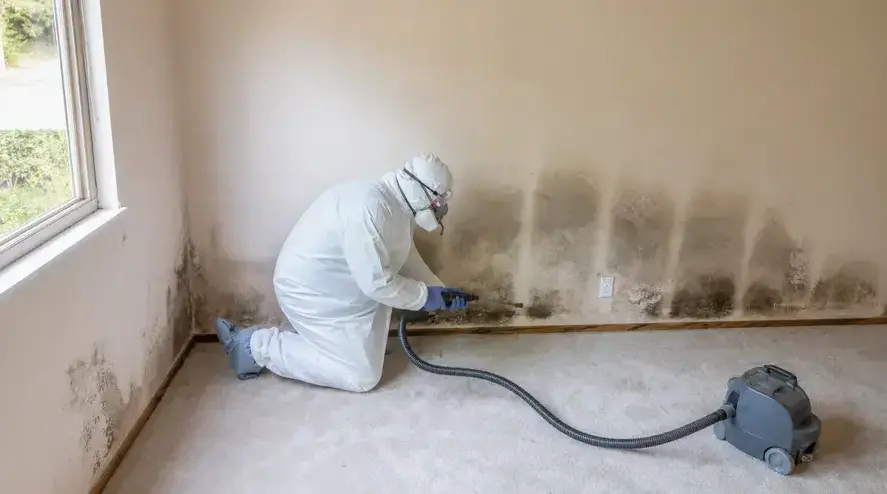
What gets cleaned in a commercial building, and what comes out
The honest answer to “does this come out, or can it be cleaned?” turns on two things — what the material is, and how many square feet are affected. Those are the two axes of the EPA’s own remediation table, reproduced below for the materials usually found in a commercial building.
| Material | Under 10 sq ftabout a cabinet door, or one ceiling tile | 10 to 100 sq ftroughly one wall, or a small bathroom | Over 100 sq ftmore than one room's worth of surface |
|---|---|---|---|
| Carpet and backingbroadloom or tile carpet and its backingEPA, Table 2 | Wet vacuumHEPA vacuum | Wet vacuumHEPA vacuumRemove and discard | Wet vacuumHEPA vacuumRemove and discard |
| Wallboardpartition walls and demountable panelsEPA, Table 2 | HEPA vacuum | HEPA vacuumRemove and discard | HEPA vacuumRemove and discard |
| Non-porous, hard surfacessealed floors, metal fixtures and glazingEPA, Table 2 | Wet vacuumDamp wipeHEPA vacuum | Wet vacuumDamp wipeHEPA vacuum | Wet vacuumDamp wipeHEPA vacuum |
| Concrete or cinder blockslabs, cores and block wallsEPA, Table 2 | Wet vacuumHEPA vacuum | Wet vacuumHEPA vacuum | Wet vacuumHEPA vacuum |
| Books and papersstored files, stock and cardboardEPA, Table 2 | HEPA vacuum | HEPA vacuum | HEPA vacuum |
What those methods mean, in EPA's words
- Wet vacuum
Wet vacuums are vacuum cleaners designed to collect water. They can be used to remove water from floors, carpets and hard surfaces where water has accumulated.
EPA, cleanup methods- Damp wipe
Mold can generally be removed from nonporous (hard) surfaces by wiping or scrubbing with water, or water and detergent.
EPA, cleanup methods- HEPA vacuum
HEPA (High-Efficiency Particulate Air) vacuums are recommended for final cleanup of remediation areas after materials have been thoroughly dried and contaminated materials removed.
EPA, cleanup methods- Remove and discard
Building materials and furnishings that are contaminated with mold growth and are not salvageable should be double-bagged using 6-mil polyethylene sheeting.
EPA, cleanup methods
Removed and replaced, whatever the area
- Ceiling tiles — drop-ceiling tiles and grid infill.
Discard and replace.
EPA, Table 1This is the action EPA's water-damage table gives for ceiling tiles. It is the one material here with no size threshold to weigh.
These guidelines are for damage caused by clean water. If you know or suspect that the water source is contaminated with sewage, or chemical or biological pollutants, then Personal Protective Equipment and containment are required by OSHA.
EPA, Table 1Porous materials that are wet and have mold growing on them may have to be discarded.
EPA, cleanup methodsMold can grow on wood, drywall, carpet and furniture if they remain wet for more than 24 hours.
EPA, flood cleanup
Commercial interiors add two materials that rarely survive — drop-ceiling tile and tile carpet — and both are usually cheaper to replace than to clean around. Sealed floors, glazing and structural concrete stay. Stock, files and cardboard are judged as paper, which EPA treats as a HEPA-vacuum item at every size rather than a removal.
About 19% of Mount Vernon homes are pre-1960, while 10.5% date from 2010 or later.Source: US Census Bureau, American Community Survey 2023 5-year estimates, table B25034 — Mount Vernon city (13,552 housing units)
Commercial Mold Remediation in Mount Vernon, WA
Mount Vernon's location in the Skagit Valley creates year-round moisture challenges that affect commercial properties across the area. The combination of persistent river moisture and coastal fog keeps humidity levels consistently elevated, and the valley's flat, flood-prone terrain allows ground water to accumulate beneath structures, contributing to indoor mold growth in ways that extend far beyond seasonal rain events. Property owners in Mount Vernon—whether managing office buildings, retail spaces, warehouses, or multi-unit commercial facilities—face a real risk of mold colonization in crawl spaces, wall cavities, HVAC systems, and other hidden zones where moisture collects unnoticed. Early detection and thorough commercial mold remediation are essential to protecting indoor air quality, preserving building integrity, and maintaining a safe environment for tenants and staff.
Blanton Mold Remediation connects Mount Vernon property owners with independent local providers who specialize in commercial mold inspection and remediation tailored to the specific risks of your facility. The process begins with a detailed assessment to identify moisture sources and the full extent of mold presence, followed by containment and removal work designed to eliminate the problem at its root rather than merely treating visible surfaces. Remediation includes addressing the moisture conditions that allowed mold to establish in the first place, ensuring that your commercial space is restored to a clean, dry state. Once work is complete, follow-up guidance and moisture management strategies help you stay ahead of future growth, so your Mount Vernon business remains healthy and protected.
Why Mount Vernon Businesses Choose Blanton for Mold
Fast Local Commercial Response
Commercial mold remediation demands speed. Blanton connects you with independent local providers in Mount Vernon who prioritize rapid response, minimizing business interruption and protecting your property's indoor air quality.
Thorough Commercial Mold Treatment
Commercial mold remediation requires comprehensive containment and removal. Independent providers in our network deliver methodical inspections, safe remediation protocols, and thorough documentation to address the scope of your commercial space.
Clear Communication Throughout
Commercial mold remediation involves multiple stakeholders and decisions. Blanton connects you with independent local providers who communicate clearly about findings, remediation steps, timelines, and next steps so you stay informed.
Ground Moisture Drives Mold Growth
The Skagit Valley's year-round moisture—from river proximity and persistent fog—creates sustained humidity that fuels commercial mold development. Commercial mold remediation in Mount Vernon addresses this environmental pressure through proper moisture control and thorough removal by local providers.
How Our Commercial Mold Remediation Process Works
Schedule Your Commercial Mold Remediation Visit
Contact Blanton Mold Remediation to connect with an independent local provider serving Mount Vernon. The provider will arrange a time to inspect your commercial property for mold growth and moisture sources.
Professional Commercial Mold Assessment & Diagnosis
The provider conducts a thorough inspection to identify mold contamination, locate moisture entry points, and assess how elevated humidity typical of the Skagit Valley region may be contributing to growth. A detailed remediation plan is then developed based on findings.
Commercial Mold Remediation & Indoor Air Recovery
The provider executes containment, removal, and restoration work to eliminate mold and restore safe indoor air quality in your commercial space. Follow-up moisture management and ventilation recommendations help prevent recurrence.
Dealing with Commercial Mold Remediation in Mount Vernon? Get fast, professional help.
Call Now — (360) 226-7710Commercial Mold Remediation Across Mount Vernon
Mount Vernon's position in the Skagit Valley creates persistent moisture conditions that affect how commercial mold remediation is approached throughout the area. Year-round humidity from river moisture and coastal fog means that indoor mold growth isn't limited to wet seasons—it can develop steadily across months when moisture infiltration goes unaddressed. Businesses in older structures, particularly those built over crawl spaces, face elevated risk because ground moisture easily migrates upward into occupied spaces, creating conditions where mold colonies establish themselves in walls, insulation, and structural materials. This geographic reality shapes the urgency and scope of commercial mold remediation work in Mount Vernon.
Whether your business operates in Downtown Mount Vernon, Hillcrest, or another part of the valley, moisture control and thorough removal are central to stopping mold recurrence. The independent local providers Blanton connects you with understand how the region's moisture patterns affect commercial properties and design remediation strategies accordingly—addressing not just visible growth but the underlying moisture sources that allow mold to return. Prompt assessment and containment protect your indoor air quality, employee health, and building integrity.
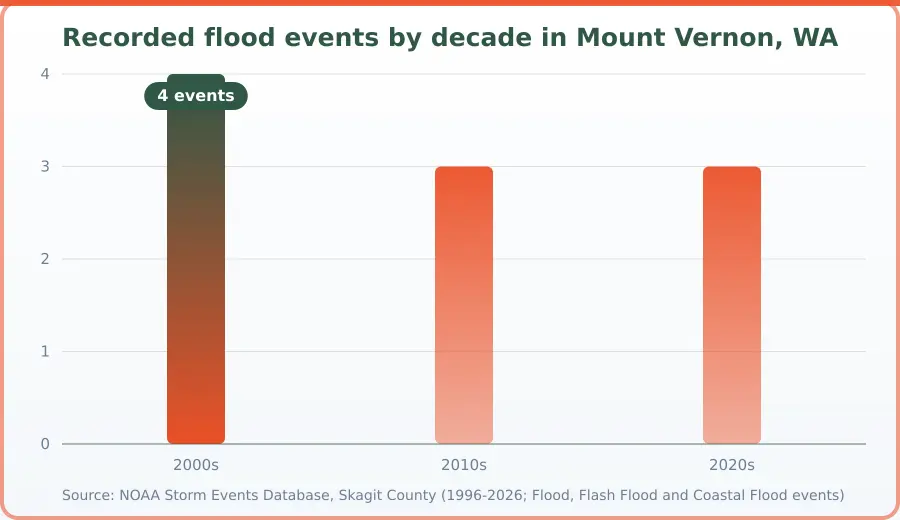
| Period | Recorded flood events by decade (events) |
|---|---|
| 2000s | 4 |
| 2010s | 3 |
| 2020s | 3 |
Source: NOAA Storm Events Database, Skagit County (1996-2026; Flood, Flash Flood and Coastal Flood events). Retrieved October 5, 2026.
Commercial Mold Remediation Through Mount Vernon's Seasons
Spring: Moisture Surge
Spring rainfall and snowmelt increase indoor humidity in commercial spaces throughout Mount Vernon. Mold growth accelerates in warehouses, offices, and retail buildings where ventilation lags behind moisture influx. Blanton connects property owners with local remediation providers who assess moisture sources and contain active growth before it spreads.
Summer: Hidden Growth
Warm summer air traps moisture inside commercial buildings, creating ideal conditions for mold colonization in HVAC systems, wall cavities, and storage areas. Property owners often overlook early-stage contamination during peak business seasons. Blanton's referral service helps identify and address commercial mold problems before they affect indoor air quality or inventory.
Fall: Rising Humidity
As outdoor temperatures drop, commercial buildings in Mount Vernon's Skagit Valley experience persistent humidity from river moisture and coastal fog, keeping indoor air saturated year-round. Fall's extended damp conditions worsen mold activity in older buildings and those built over crawl spaces, where ground moisture rises into occupied spaces. Blanton connects owners with providers who evaluate structural moisture and implement targeted remediation.
Winter: Condensation Problems
Winter cold increases condensation on windows, pipes, and exterior walls in commercial buildings, while reduced ventilation concentrates indoor moisture. Mold thrives in these stagnant, damp environments, particularly in break rooms, bathrooms, and unheated storage zones. Blanton helps property owners find local providers experienced in winter moisture control and safe commercial mold removal.
Related Services
Commercial Mold Remediation FAQs — Mount Vernon, WA
Commercial mold remediation addresses mold growth in business properties through inspection, containment, removal of affected materials, and restoration. The process includes identifying moisture sources, isolating the contaminated area to prevent spore spread, removing or treating mold-damaged materials, drying the space thoroughly, and repairing or replacing structural elements. Independent local providers handle each step to restore safe indoor air quality and prevent recurrence in your commercial space.
Blanton Mold Remediation connects Mount Vernon property owners with local independent providers who typically respond within hours of your initial contact. Quick response is important because mold spreads rapidly in moist environments. The local providers we connect you with understand the urgency and work to assess your commercial property promptly so that remediation can begin without unnecessary delay.
Commercial mold remediation pricing depends on the size of the affected area, how deeply mold has penetrated materials, the complexity of containment required, and moisture source repair needs. Additional factors include property layout, accessibility, and whether structural components require replacement. Each independent provider offers their own pricing based on the specific conditions found during inspection. Contact a local provider through Blanton for a detailed estimate tailored to your property.
Before remediation begins, secure the contaminated area and restrict employee access to prevent exposure. Remove portable items and sensitive equipment from the affected zone if safe to do so. Notify your staff about the work schedule and expected timeline. The independent provider will guide you on additional preparation steps. They'll handle containment setup, protective measures, and restoration work, keeping disruption to your business operations as minimal as possible.
After remediation, prevent mold recurrence by maintaining indoor humidity below 55 percent using dehumidifiers or HVAC adjustments, fixing water leaks immediately, and ensuring proper drainage around your building exterior. Inspect crawl spaces and lower areas regularly for moisture accumulation. Improve ventilation in bathrooms, kitchens, and storage areas. Schedule periodic inspections to catch early moisture problems before mold develops again in your commercial space.
Mount Vernon's location in the Skagit Valley creates persistent moisture challenges year-round. Elevated humidity from river proximity and coastal fog means indoor moisture lingers even between rainfall events. Many older commercial buildings in the area have crawl spaces or below-grade areas where ground moisture accumulates easily, especially on the valley's flat terrain. These environmental conditions make active moisture control and drainage critical to preventing mold growth in commercial properties.
Homeowner Safety Toolkit
Verify Your Mount Vernon, WA Mold Remediation Company
Before you hire anyone, use these independent national resources to confirm credentials, standards, and track record.
BBB
Look up any mold remediation company's complaint history, customer reviews, and accreditation status — a free, independent check before you hire.
Check StandingCDC
Covers the health effects of mold exposure and safe cleanup practices, separate from the remediation work itself — useful if anyone in the home has respiratory symptoms.
Mold Health GuideACAC
An independently accredited certifying body for mold inspectors and consultants — one of the few in this field whose standards are verified by an outside accreditation board, not just self-declared.
Find a Certified InspectorDealing with Commercial Mold Remediation in Mount Vernon, WA? Call (360) 226-7710 for 24/7 help.
Call Now — (360) 226-7710Areas We Serve in Mount Vernon, Washington
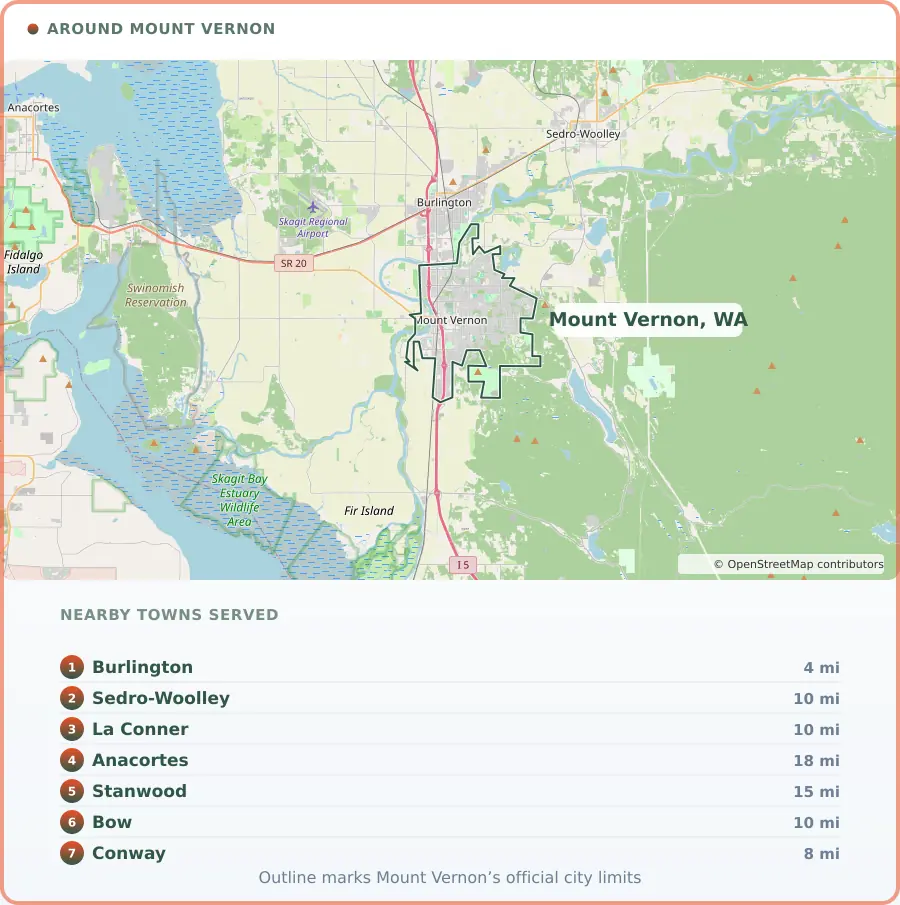
Serving Mount Vernon, WA and 7 communities around it. Local knowledge of how each area is built shapes how the work is handled there.
Mount Vernon, WA Information
Mount Vernon sits where the Skagit River meets Interstate 5, serving as the county seat of Skagit County and the commercial heartbeat for the farming communities that ring it. The fertile valley around the city has long supported bulbs, berries, and dairy, and that agricultural legacy still shapes local life—most visibly each spring when the Skagit Valley Tulip Festival draws visitors from across the region. Government offices, Skagit Valley Hospital, and Skagit Valley College add steady institutional weight alongside the fields.
With close to 36,000 residents, Mount Vernon feels like a real working town rather than a bedroom suburb—neighborhoods like Eaglemont and downtown each carry their own character, while retail, food processing, and public services keep the economy diverse. It's a place built on riverbanks and farmland, grounded and unpretentious.
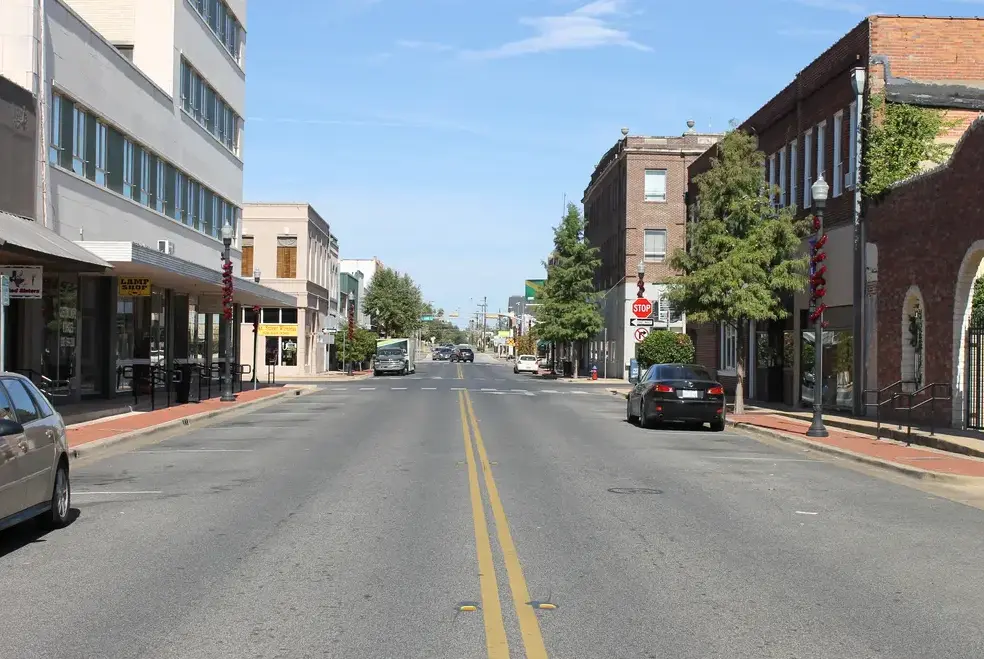
Photo: Billy Hathorn, CC BY-SA 3.0