

Mold Damage Restoration in Mount Vernon, WA
Mount Vernon's position in the Skagit Valley means persistent moisture from river proximity and coastal fog creates conditions where indoor mold growth becomes a year-round concern for property owners, especially in older homes built over crawl spaces where ground moisture accumulates readily. Mold Damage Restoration addresses the structural and air-quality impact of active mold colonization, requiring prompt assessment and removal by local providers who understand the region's moisture patterns. Blanton Mold Remediation connects you with independent local specialists in Mount Vernon who can evaluate the scope of damage and coordinate the remediation work your property needs.
Mold Damage Restoration Services in Mount Vernon, WA
Mount Vernon's position in the Skagit Valley creates persistent moisture conditions that make mold damage restoration a genuine concern for many property owners. The region's marine influence keeps humidity elevated throughout the year, and the valley's flat terrain often traps ground moisture around foundations and crawl spaces. Older homes across Mount Vernon are especially vulnerable to moisture accumulation beneath the structure, where poor drainage or standing water can feed mold growth year-round—not just seasonally. When moisture persists indoors, mold can develop quickly, affecting air quality and structural integrity. Property owners who notice discoloration, musty odors, or visible growth need prompt mold damage restoration to stop the problem from spreading and restore a safe indoor environment.
Blanton Mold Remediation connects Mount Vernon property owners with independent local providers who specialize in mold damage restoration. These professionals conduct thorough inspections to identify affected areas and moisture sources, then develop a targeted remediation plan that includes safe containment, removal of damaged materials, and drying to prevent recurrence. Rather than a quick surface treatment, mold damage restoration through this network focuses on eliminating the root cause so the problem does not return. By connecting you with providers who understand Mount Vernon's specific moisture challenges, this service helps ensure your property is restored properly and your indoor air quality returns to healthy levels.
Why Mount Vernon Property Owners Choose Blanton Mold Damage Restoration
Thorough Mold Damage Restoration
Mold damage restoration requires complete identification and removal of affected materials. Blanton connects you with local providers who conduct detailed inspections, containment, and remediation to address moisture sources and prevent recurrence.
Fast Mold Damage Restoration Response
Mold damage restoration works best when started quickly. Blanton's referral network links Mount Vernon property owners with nearby independent providers ready to assess and begin restoration promptly, minimizing damage and indoor air quality concerns.
Clear Communication During Restoration
Mold damage restoration involves multiple steps and decisions. Blanton connects you with local providers who explain findings, restoration scope, and next steps in plain language, keeping you informed throughout the process.
Moisture Control in the Skagit Valley
Year-round moisture from river proximity and fog creates persistent indoor humidity challenges across the region. Blanton's local providers understand how elevated moisture drives mold damage restoration needs and address underlying dampness, not just visible growth.
How Our Mold Damage Restoration Process Works
Schedule Your Mold Damage Restoration Visit
Contact Blanton Mold Remediation to describe visible mold, musty odors, or water damage affecting your Mount Vernon property. We connect you with a local mold damage restoration provider who will schedule an inspection at your convenience.
Receive Professional Mold Damage Assessment
An independent local inspector evaluates affected areas, identifies moisture sources—common in the Skagit Valley's persistently humid environment—and determines the scope of mold damage restoration needed to restore safe indoor air quality.
Complete Mold Damage Restoration & Verification
The remediation provider removes contaminated materials, addresses underlying moisture, and restores affected spaces. Follow-up inspection confirms that mold damage restoration is complete and your property is returned to a safe, healthy condition.
Dealing with Mold Damage Restoration in Mount Vernon? Get fast, professional help.
Call Now — (360) 226-7710Mold Damage Restoration Across Mount Vernon
Mount Vernon's position in the Skagit Valley creates persistent moisture conditions that drive mold growth throughout the year. The combination of river proximity and coastal fog keeps humidity elevated even between rainy seasons, making indoor moisture management a year-round concern for property owners. This continuous moisture load accelerates mold colonization in homes and businesses, particularly in older structures where construction methods and material choices offer less resistance to prolonged dampness. Mold Damage Restoration in Mount Vernon requires providers who understand these persistent humidity patterns and can address not just visible growth but the underlying moisture sources that sustain it.
Many older properties in neighborhoods like Eaglemont and Riverside were built over crawl spaces, where ground moisture accumulates more readily due to the valley's flat terrain and poor drainage patterns. This foundation design, combined with regional humidity, means mold often develops in concealed spaces before becoming obvious indoors. Effective Mold Damage Restoration here involves thorough inspection of crawl-space environments, targeted moisture control, and removal protocols suited to the specific construction and climate challenges Mount Vernon properties face. Local providers connected through Blanton understand these regional factors and can tailor remediation strategies to protect your property's long-term integrity and indoor air quality.
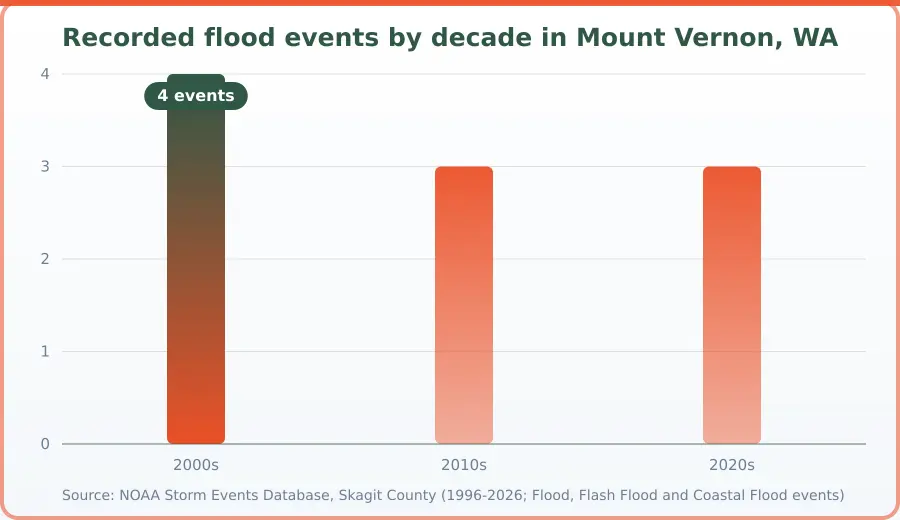
| Period | Recorded flood events by decade (events) |
|---|---|
| 2000s | 4 |
| 2010s | 3 |
| 2020s | 3 |
Source: NOAA Storm Events Database, Skagit County (1996-2026; Flood, Flash Flood and Coastal Flood events). Retrieved October 5, 2026.
Seasonal Mold Damage Restoration Needs in Mount Vernon
Spring: Thaw & Saturation
Snowmelt and spring rainfall saturate ground around Mount Vernon homes, driving moisture into crawl spaces and lower walls where mold colonies establish quickly. Blanton Mold Remediation connects property owners to local restoration providers who inspect moisture sources, remove affected materials, and restore indoor air quality before active mold spreads.
Summer: Growth Acceleration
Warm temperatures speed mold development in damp indoor spaces, especially where winter and spring moisture was never fully dried. Property owners in areas like Downtown Mount Vernon and Eaglemont often discover visible mold during summer inspections. Blanton links homeowners to providers who assess hidden growth, contain affected zones, and perform thorough remediation before fall humidity returns.
Fall: Persistent Ground Moisture
The region's elevated humidity from persistent river moisture and coastal fog combines with fall rainfall, keeping crawl spaces and foundations damp year-round—a primary driver of mold damage restoration needs in Mount Vernon's older housing stock. Blanton Mold Remediation helps property owners connect with local providers who address this chronic moisture environment through targeted inspection, containment, and restoration work tailored to ground-level moisture intrusion.
Winter: Cold & Condensation
Indoor heating creates temperature differences that drive condensation in poorly ventilated areas, while outdoor moisture penetrates building envelopes. Mold damage restoration demands often spike as condensation-fed colonies become visible. Blanton Mold Remediation connects Mount Vernon property owners to providers who identify condensation sources, remove compromised materials, and restore affected spaces before spring moisture increases damage further.
Related Services
Mold Damage Restoration FAQs — Mount Vernon, WA
Mold Damage Restoration addresses visible mold growth and affected materials through inspection, containment, removal of contaminated areas, and thorough drying. The process may include cleaning non-porous surfaces, replacing damaged drywall or insulation, and addressing the moisture source. Local providers connected through Blanton assess the extent of damage and outline the restoration steps needed to restore safe indoor air quality.
Blanton Mold Remediation connects you with independent local restoration providers in Mount Vernon who can respond to your needs quickly. Once you reach out, local providers can often schedule inspections and discuss restoration timelines within days. The speed of the actual restoration work depends on the scope of damage, but having a nearby professional address the problem promptly helps prevent mold from spreading further.
Mold Damage Restoration costs depend on the affected area's size, types of materials involved, moisture source severity, and containment complexity. Homes with crawl spaces may face different scope considerations than other structures. The independent provider you're connected with will assess your property and provide pricing details. Insurance coverage varies, so confirm your policy details separately with your insurer.
Before restoration begins, limit access to affected areas and avoid disturbing mold, which can release spores. Clear the work zone of personal items if advised. The restoration provider will explain containment and safety steps they'll take. Ask about ventilation, access needs, and how long the work typically takes. Staying informed about the process helps the restoration proceed smoothly and safely.
After restoration, controlling moisture is essential. Fix leaks promptly, use exhaust fans in bathrooms and kitchens, and maintain relative humidity below 50% when possible. In Mount Vernon's humid climate, dehumidifiers and proper ventilation help manage indoor moisture year-round. The restoration provider may recommend specific steps for your home. Monitoring damp areas regularly helps catch new moisture problems early.
Mount Vernon's Skagit Valley setting means elevated moisture levels persist throughout the year from river and coastal influences. Combined with the area's flat terrain and drainage patterns, ground moisture frequently enters homes and builds up indoors. This year-round moisture environment makes mold growth more likely, so prompt Mold Damage Restoration and moisture control become critical to protecting indoor air quality and structural integrity.
Homeowner Safety Toolkit
Verify Your Mount Vernon, WA Mold Remediation Company
Before you hire anyone, use these independent national resources to confirm credentials, standards, and track record.
BBB
Look up any mold remediation company's complaint history, customer reviews, and accreditation status — a free, independent check before you hire.
Check StandingCDC
Covers the health effects of mold exposure and safe cleanup practices, separate from the remediation work itself — useful if anyone in the home has respiratory symptoms.
Mold Health GuideACAC
An independently accredited certifying body for mold inspectors and consultants — one of the few in this field whose standards are verified by an outside accreditation board, not just self-declared.
Find a Certified InspectorDealing with Mold Damage Restoration in Mount Vernon, WA? Call (360) 226-7710 for 24/7 help.
Call Now — (360) 226-7710Areas We Serve in Mount Vernon, Washington
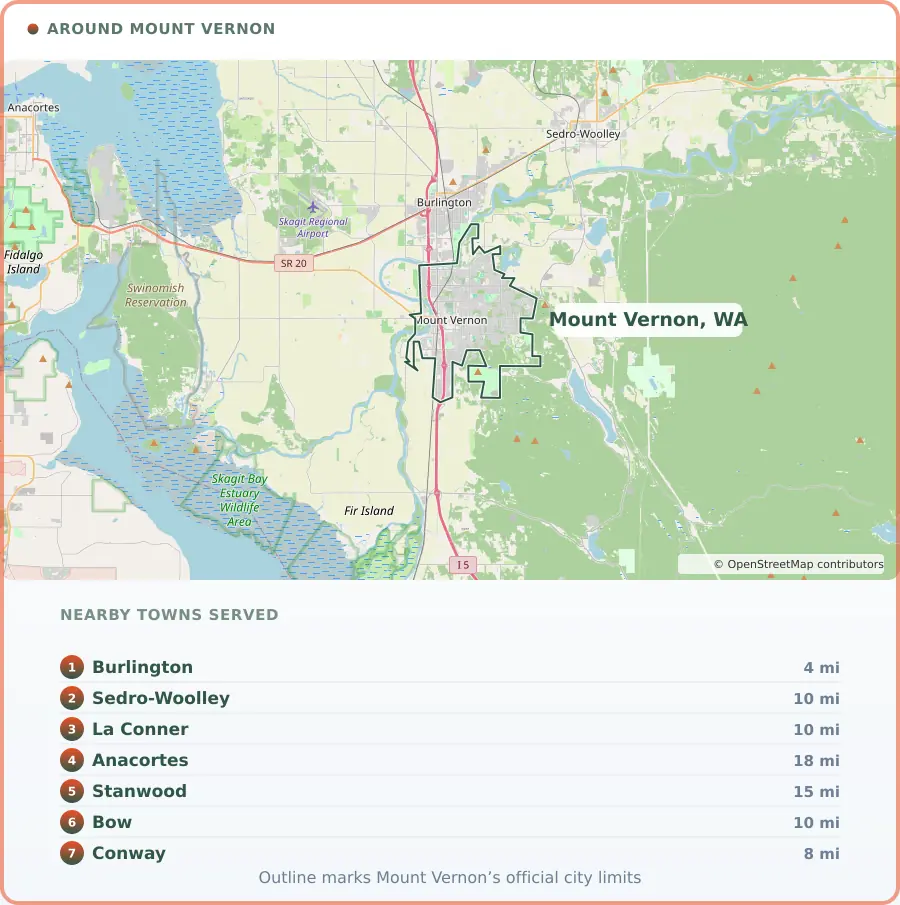
Serving Mount Vernon, WA and 7 communities around it. Local knowledge of how each area is built shapes how the work is handled there.
Mount Vernon, WA Information
Mount Vernon sits where the Skagit River meets Interstate 5, serving as the county seat of Skagit County and the commercial heartbeat for the farming communities that ring it. The fertile valley around the city has long supported bulbs, berries, and dairy, and that agricultural legacy still shapes local life—most visibly each spring when the Skagit Valley Tulip Festival draws visitors from across the region. Government offices, Skagit Valley Hospital, and Skagit Valley College add steady institutional weight alongside the fields.
With close to 36,000 residents, Mount Vernon feels like a real working town rather than a bedroom suburb—neighborhoods like Eaglemont and downtown each carry their own character, while retail, food processing, and public services keep the economy diverse. It's a place built on riverbanks and farmland, grounded and unpretentious.
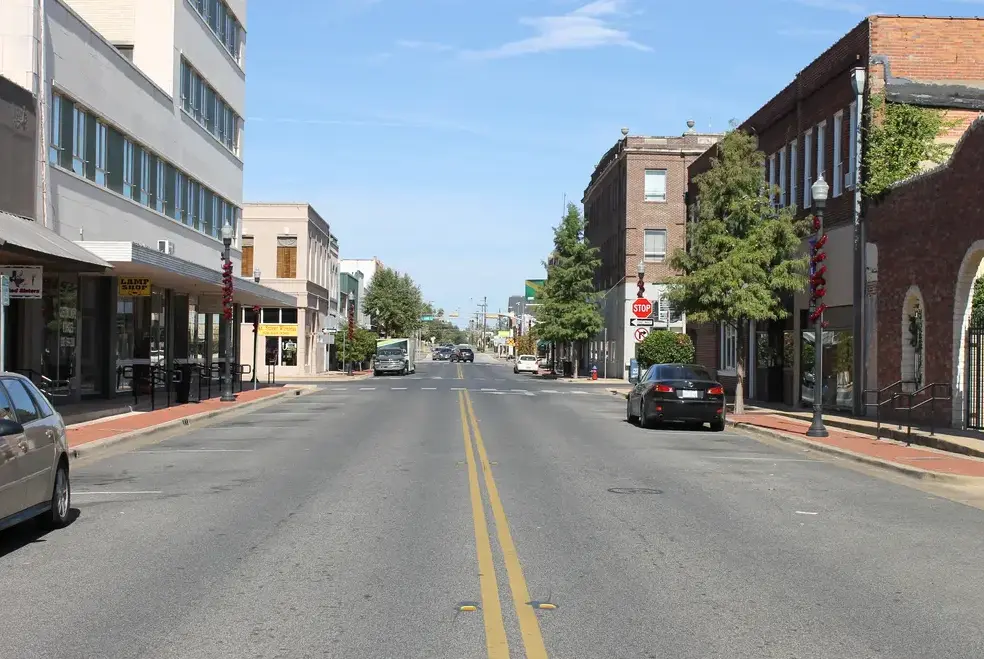
Photo: Billy Hathorn, CC BY-SA 3.0